
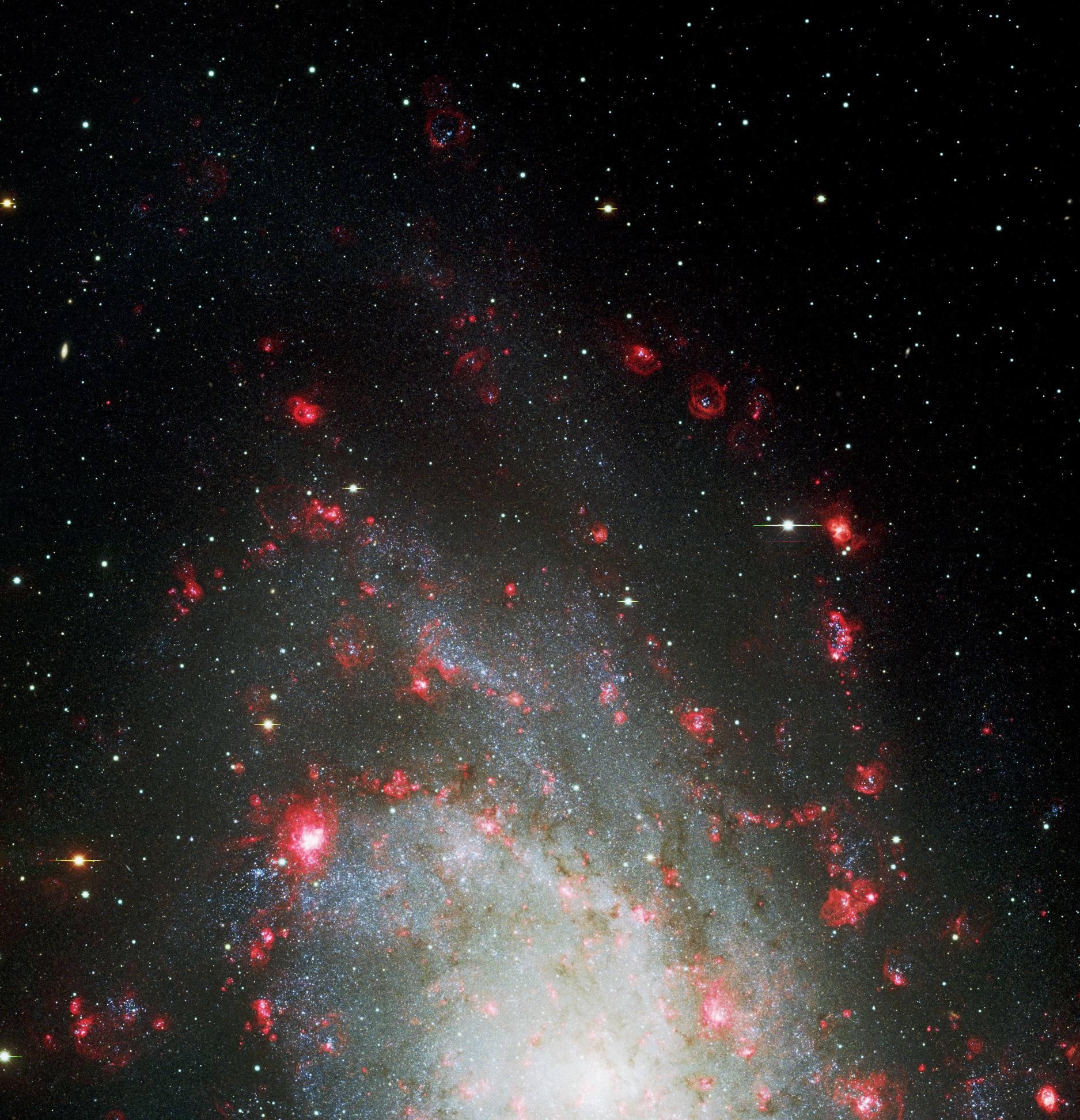
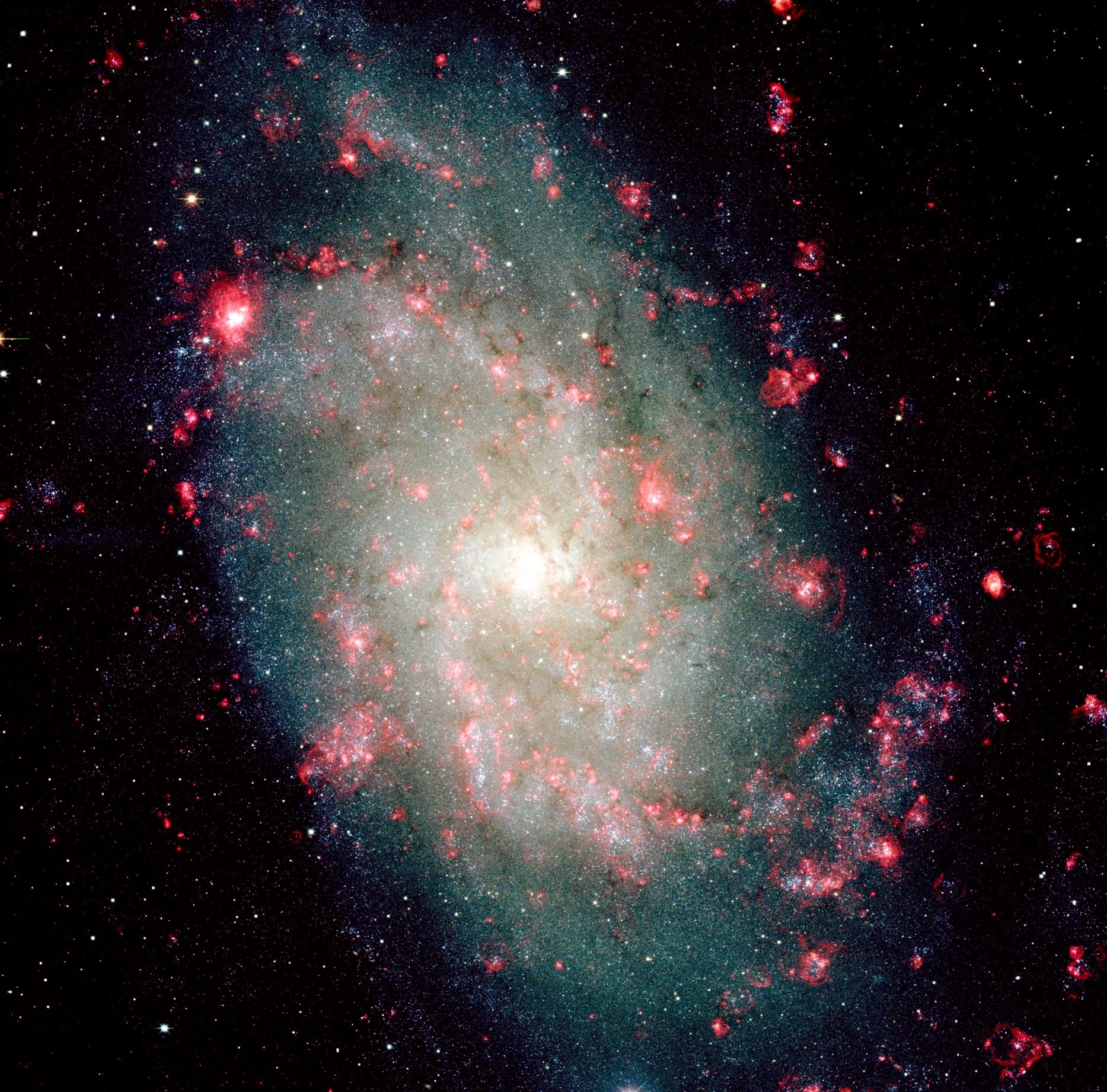
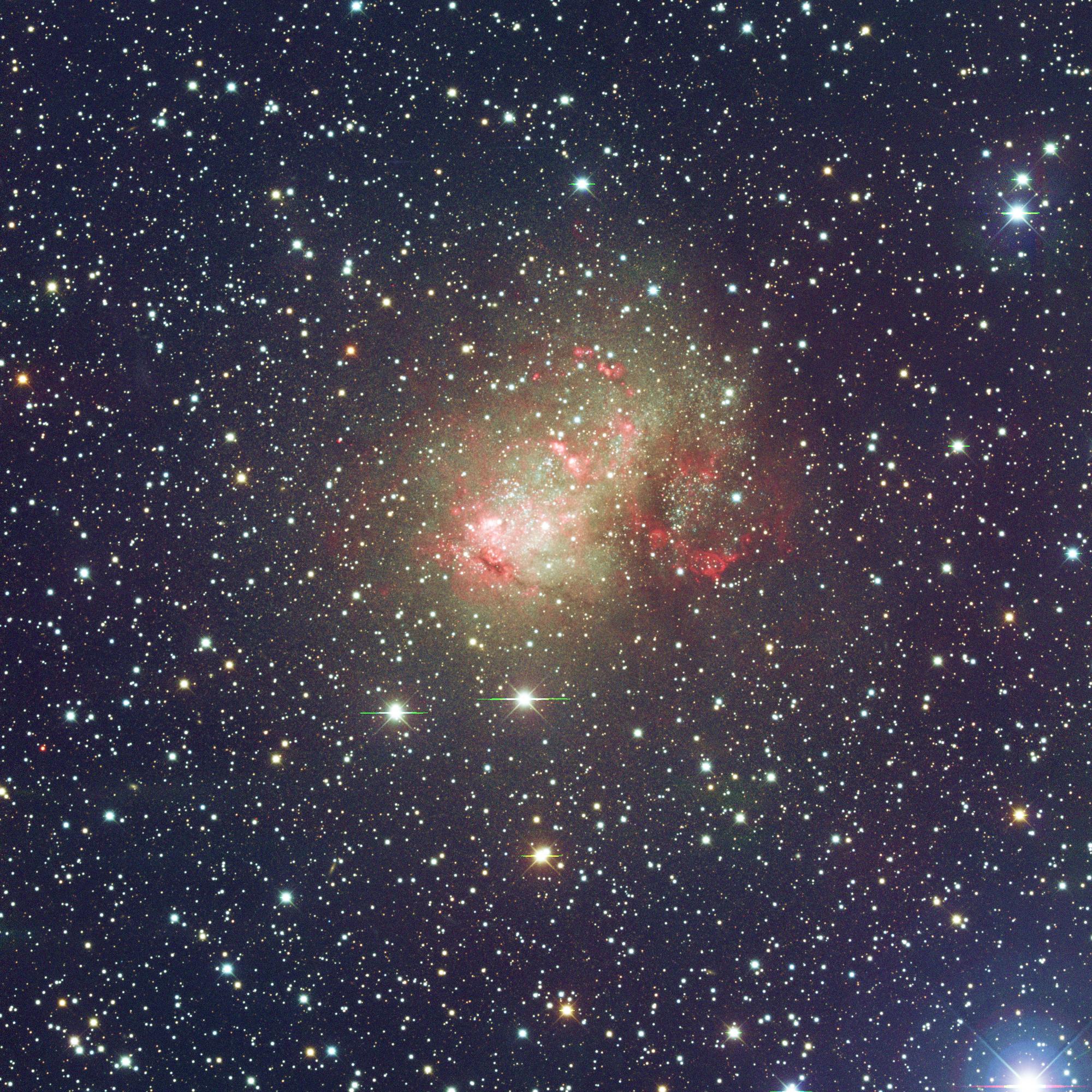
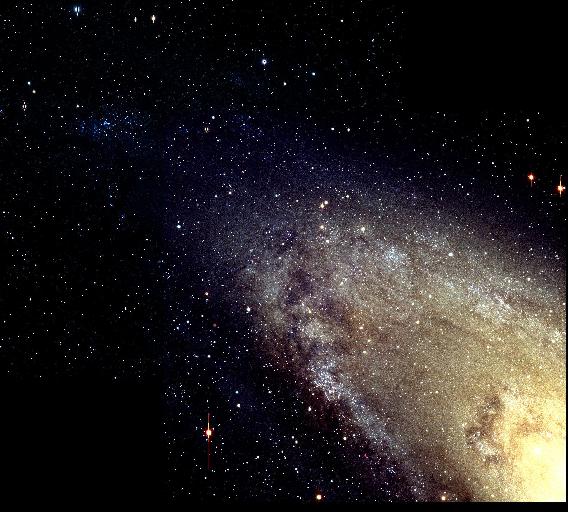
 Two of our 10 M31 fields mosaiced together; color based upon our
BVR images.
Two of our 10 M31 fields mosaiced together; color based upon our
BVR images.
Two of our 10 M31 fields mosaiced together; color based upon our
BVR images.
The galaxies of the Local Group serve as our laboratories for understanding star formation and stellar evolution in differing environments: the galaxies currently active in star-formation in the Local Group cover a factor of 10 in metallicity and span a range of Hubble types from dwarf spheroidal to Irr to Sb and Sc. We are conducting a uniform survey (UBVRI, Halpha, [SII], and [OIII]) of nearby galaxies selected on the basis of current star formation. In the Local Group, this sample includes M31, M33, NGC 6822, IC 1613, IC 10, WLM, Pegasus, and Phoenix; we exclude the Milky Way and Magellanic Clouds, which are being surveyed separately by seve ral groups. We also include Sextans A and Sextans B, located just beyond the Local Group (van den Bergh 1999a, 1999b). Using the new, wide-field Mosaic cameras, we are producing catalogs of UBVRI photometry of roughly a million stars, using Halpha, [SII], and [OIII] to distinguish bona fide stellar members from compact HII regions. This on-line catalog will answer a number of scientific questions directly, but we believe that the real strength of this survey will be in the science we will enable with 8-10-m class telescopes and the capability of follow-u p spectroscopy. In addition, the calibrated images will provide a detailed, uniform atlas of both the stellar and ionized gas components of these galaxies, which will certainly prove useful for a host of other projects.
The following compose our Survey Team:
CTIO has kindly put nice versions of our images as downloads; go to http://www.ctio.noao.edu/images/download_pict/local_group_survey.htm
In addition.... Mosaic of our 10 M31 frames! If that takes too long for you to download, try this smaller version. Put together by K. Olsen.
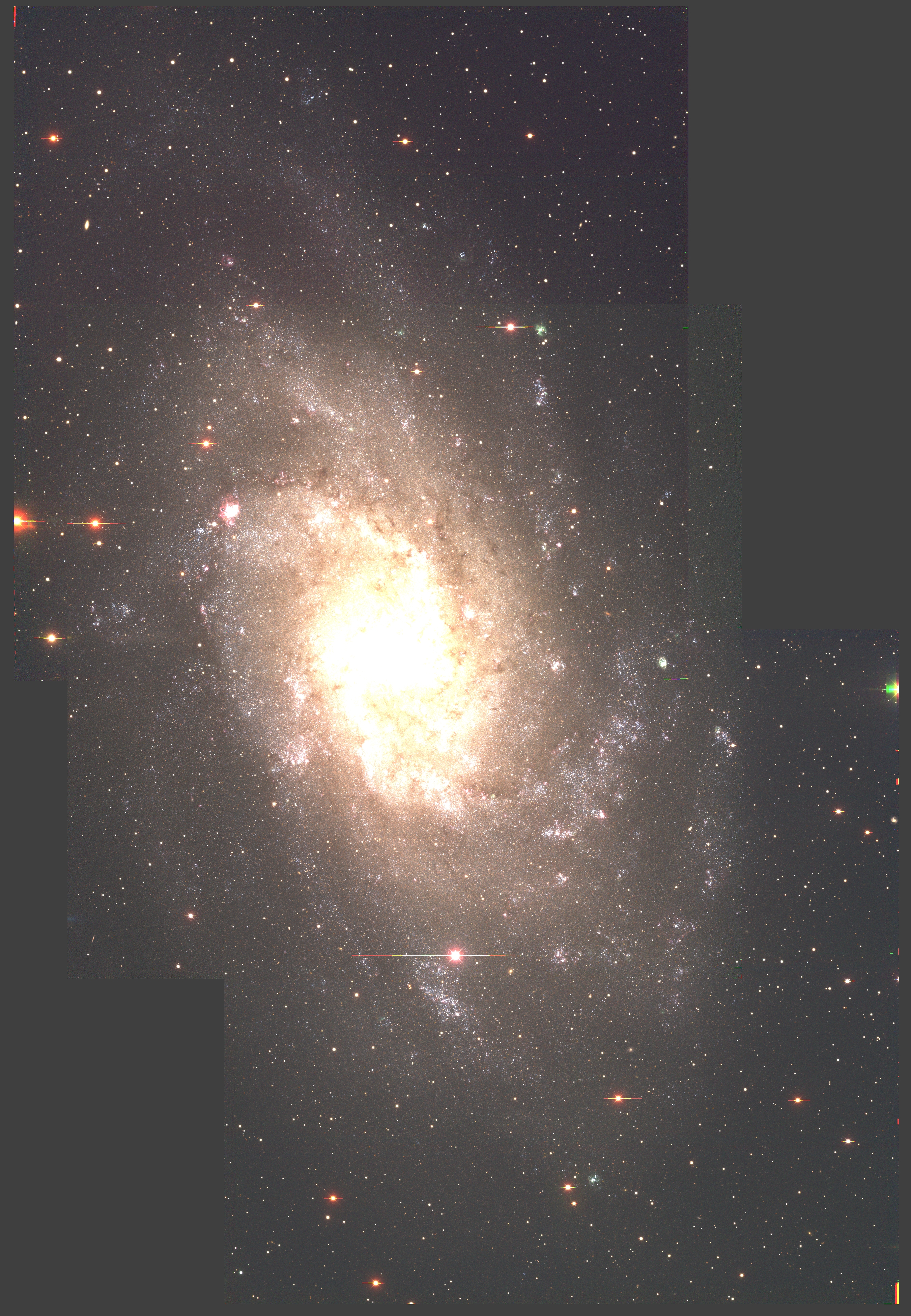
Mosaic of our 3 M33 frames put together by K. Olsen.


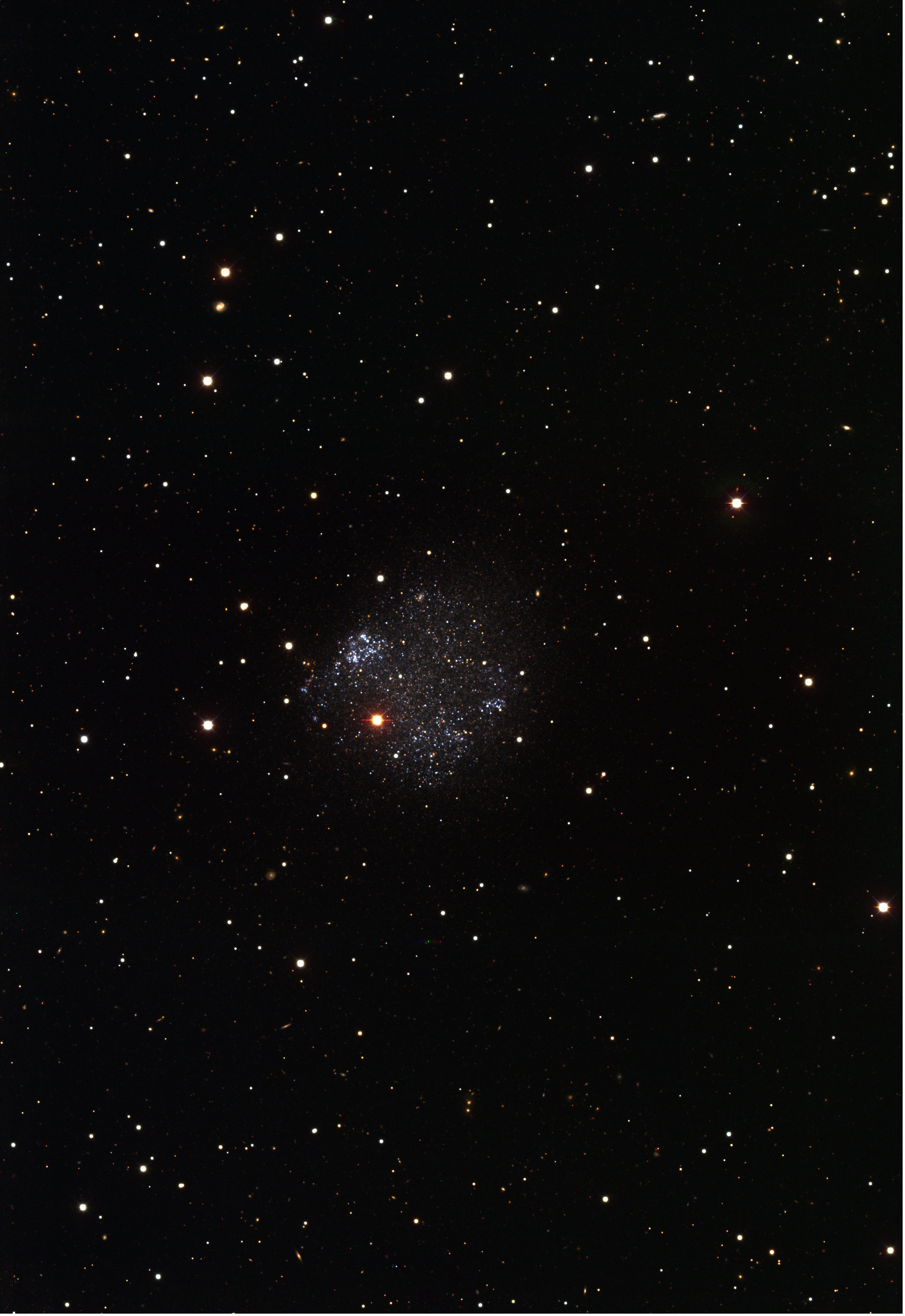
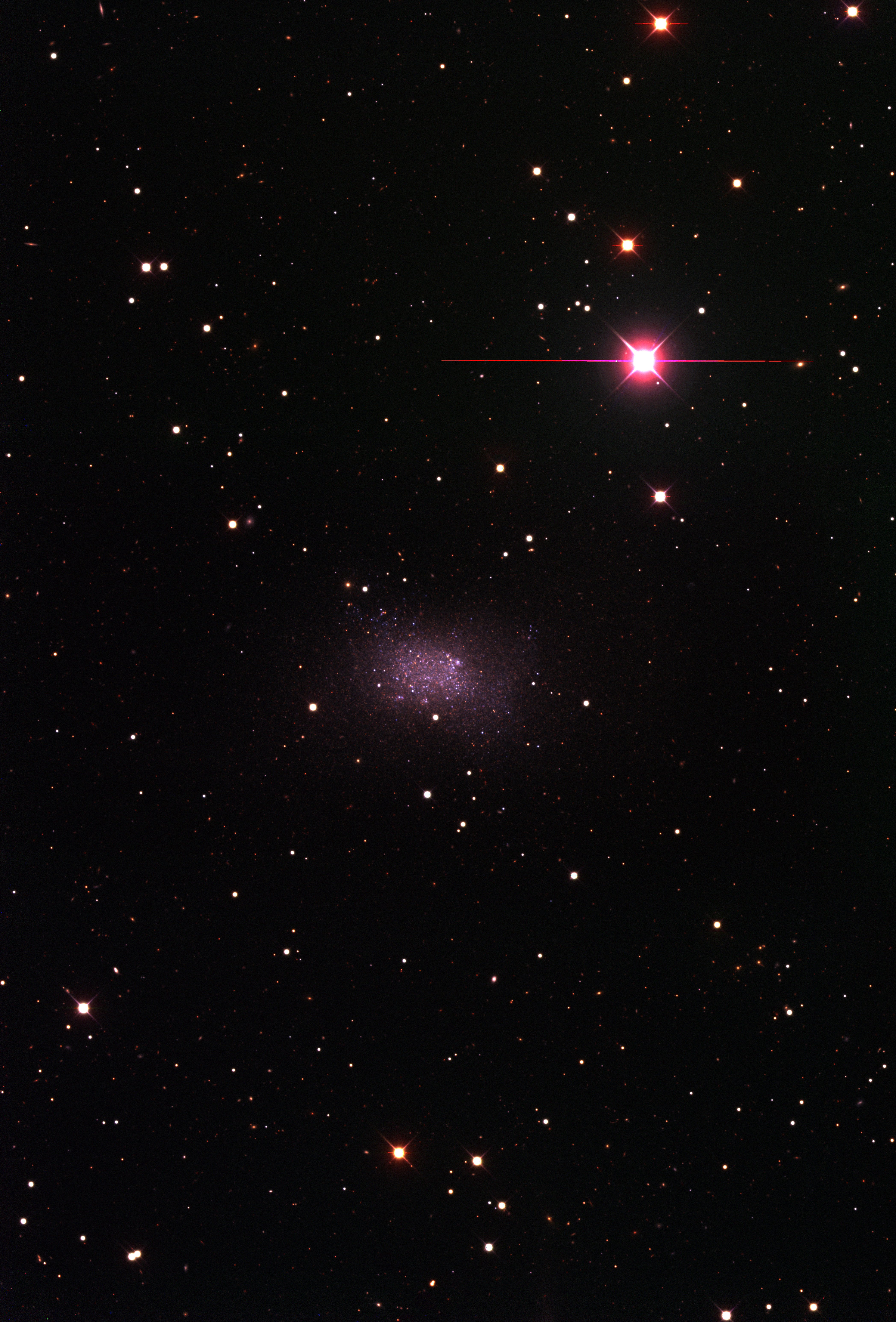
High resolution IC10 put together by K. Olsen

High resolution WLM put together by K. Olsen
High resolution Phoenix put together by K. Olsen
High resolution NGC6822 put together by K. Olsen
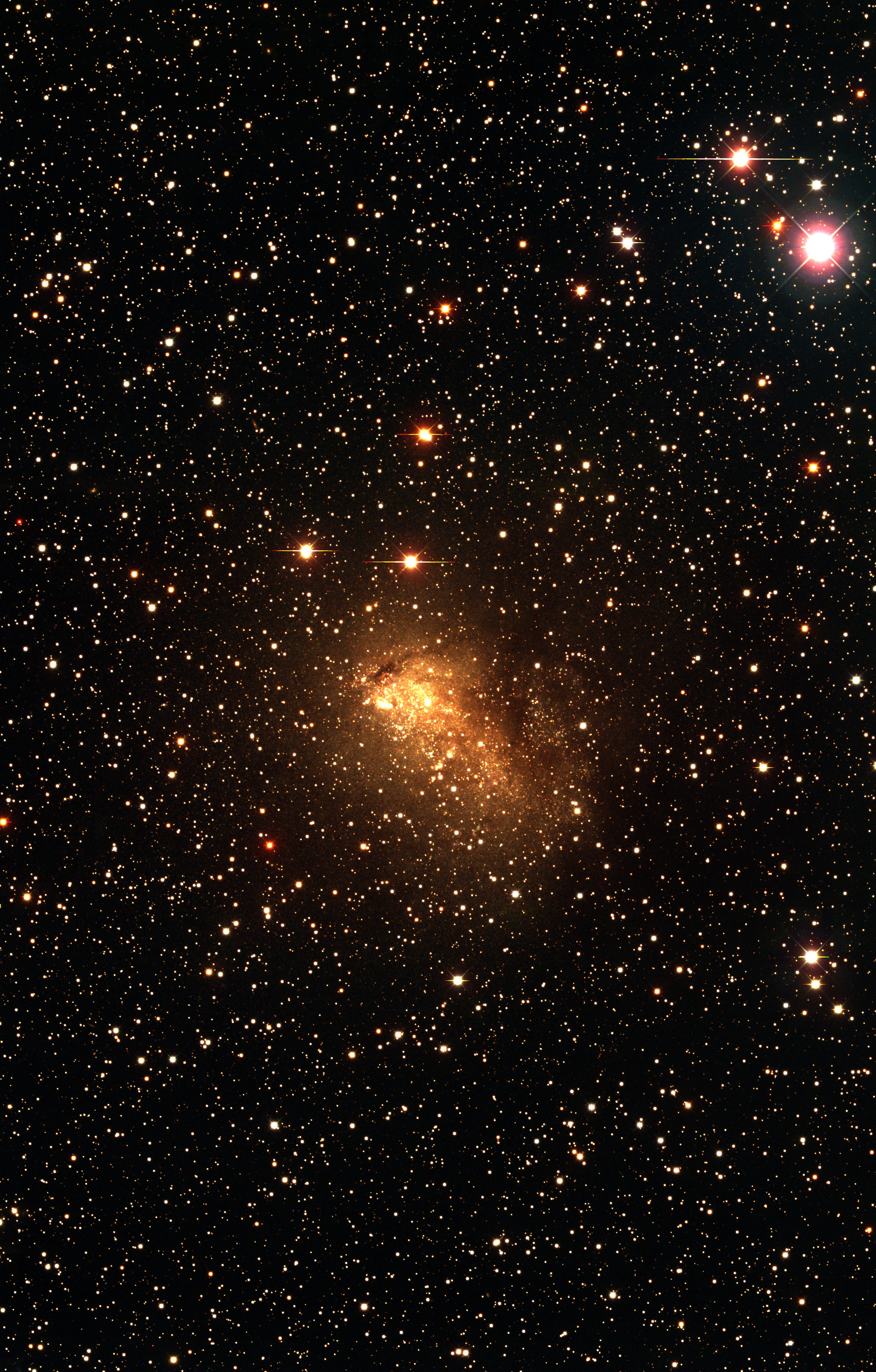
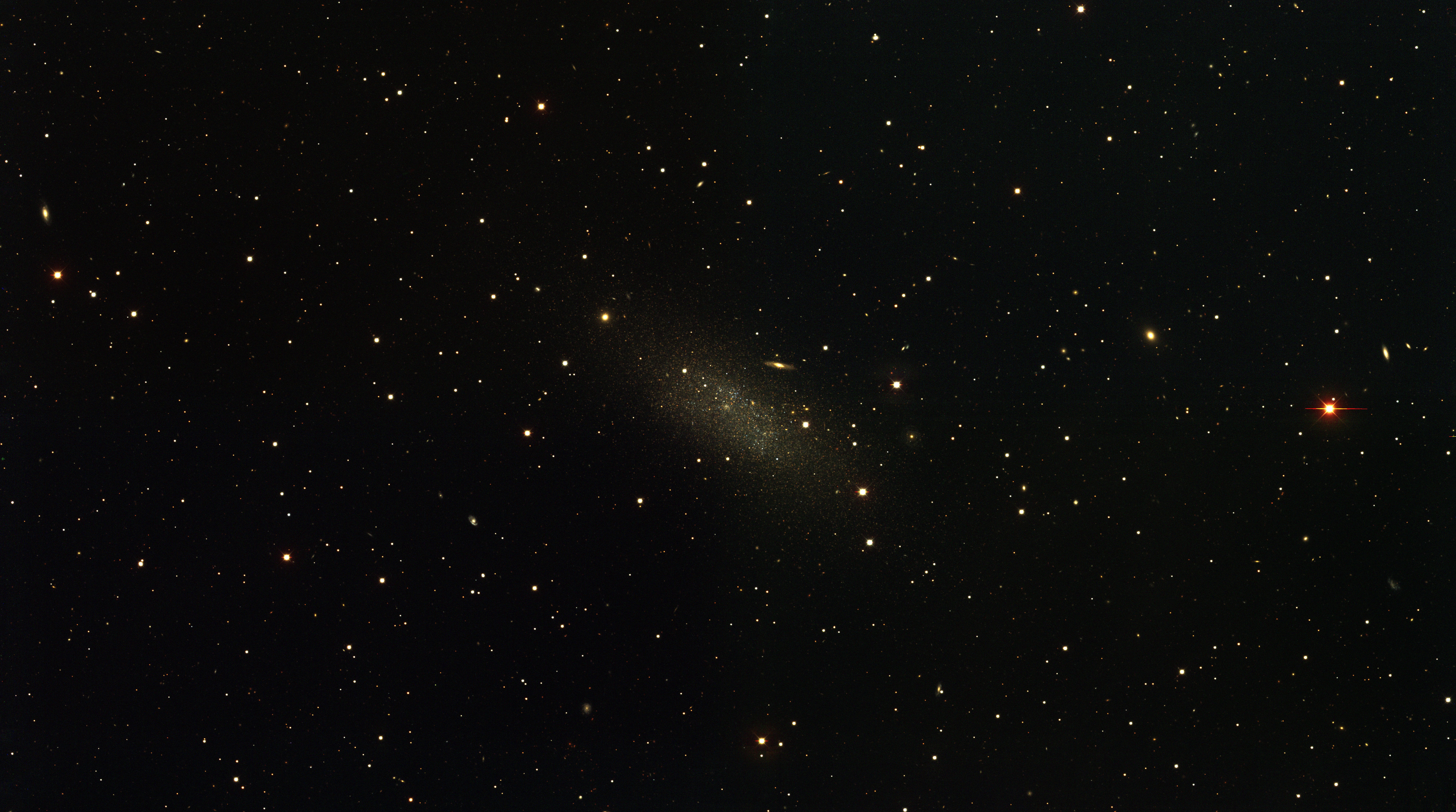
High resolution Sextans A put together by K. Olsen
High resolution Sextans B put together by K. Olsen
High resolution the Pegasus dwarf put together by K. Olsen Large version of M31 Fields 1 and 2 mosaic
High resolution M33 (3 fields) (HII regions emphasized)
High resolution M33 North (HII regions emphasized)
High resolution M33 Center (HII regions emphasized)
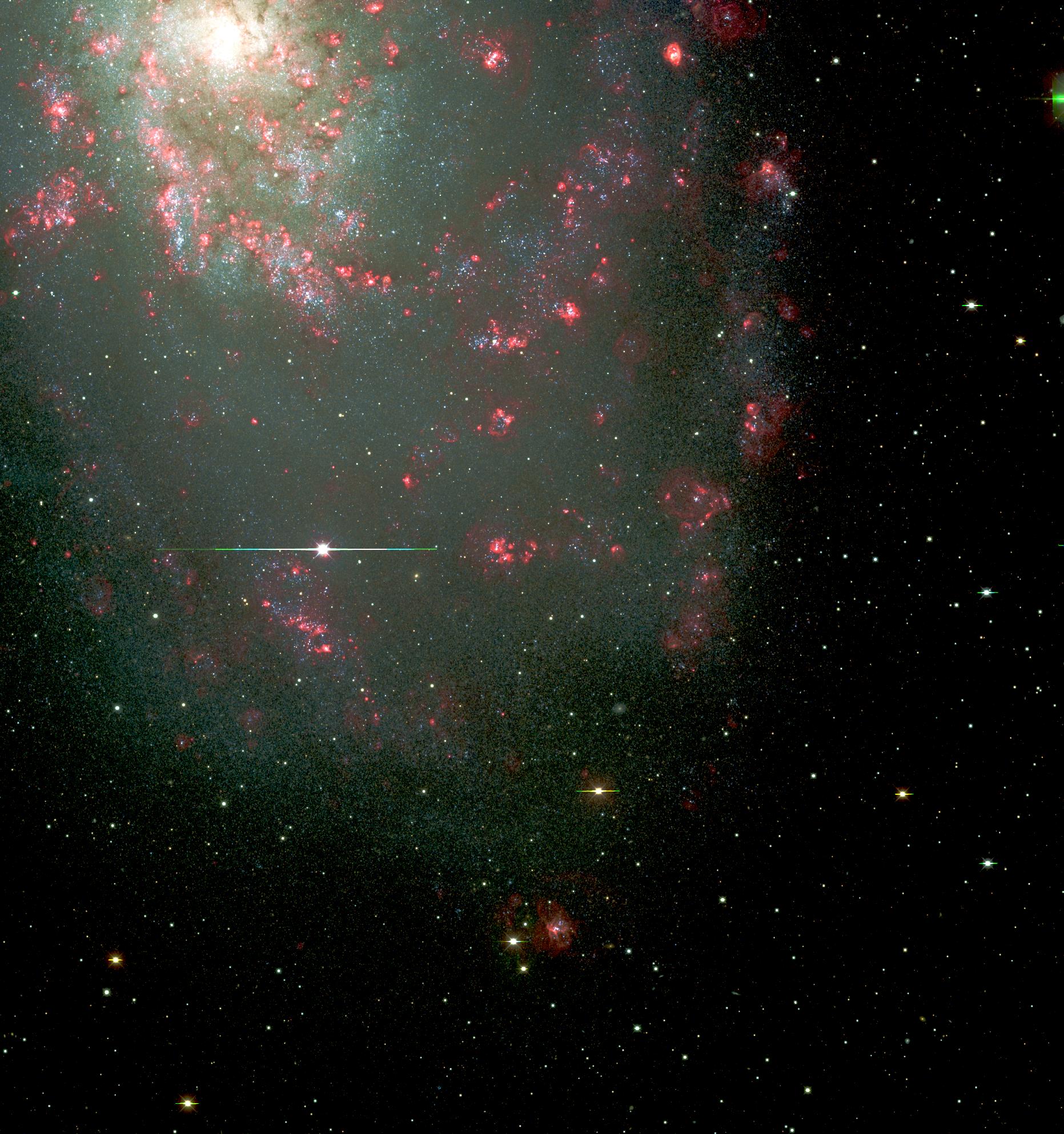
High resolution M33 South (HII regions emphasized)
We have now released all of our images: 20 fields (M31: 10 fields, M33: 3 fields, plus IC10, N6822, WLM, Phoenix, Pegasus, Sextans A, and Sextans B.) The stacked images can be downloaded either from ftp://ftp.lowell.edu/pub/massey/lgsurvey or from http://www.archive.noao.edu/nsa/ The individual images can be obtained from http://www.archive.noao.edu/nsa/ Tell them Phil send you.
Our UBVRI and narrow-band photometry is complete. The first paper ``A Survey of Local Group Galaxies Currently Forming Stars. I. UBVRI Photometry of Stars in M31 and M33 was published in Massey et al. 2006 AJ 131, 2478.
The second paper, ``...II. UBVRI Photometry of Stars in Seven Dwarfs and a Comparison of the Entire Sample" has now also come out: Massey et al. 2007, AJ, 133, 2393.
The third paper, "...III. A Search for Luminous Blue Variables and
Other Halpha Emission-Lined Stars" is now also out:
Massey et al. 2007, AJ, 134, 2474
The UBVRI data files can be downloaded here:
PLEASE send me (phil.massey at lowell.edu) a note giving publication information
if you use our data or photometry so we can include it when we are bugged by
NOAO to give them this information each year.
What about the emission-line data (not covered in the above?
We discuss the calibration and give the final numbers in
Massey et al (2007, AJ, 134, 2474); see Table 2. Note that there
is a typo in the table, though: the units for the emission-line
filters should be ergs/sec/cm^2, not ergs/sec/cm^2/A.
Here is the final status report to the NOAO survey workshop, April 14, 2003.
Click on the link for our finding charts, made from the DSS, and showing the
region to be covered by our survey.
E-mail:
massey @ lowell.edu
PUBLICATIONS (Ours and Others)
We also milked the survey for several AAS posters and talks:
How We're Reducing
Our Mosaic Data
Our color-terms: We've measured the broad-band color terms for both
Mosaic-N (Massey et al. 2006 AJ, 131, 2478) and
Mosaic-S (
Massey et al 2007 AJ, 133, in press>).
A few points about
photometry
The Galaxies
Some of Our Science Goals
This material is based upon work supported by the National Science Foundation under Grant No. 0093060. Any opinions, findings, and conclusions or recommendations expressed in this material are those of the author(s) and do not necessarily
reflect the views of that National Science Foundation.
Last updated Jan 4 , 2008